Hammer toe
Find a doctorHammer toe can be uncomfortable, but a change in lifestyle can help you alleviate your pain. At Atrium Health Floyd and Harbin Clinic, we can help you understand how your hammer toe is developing and what you can do to remedy it.
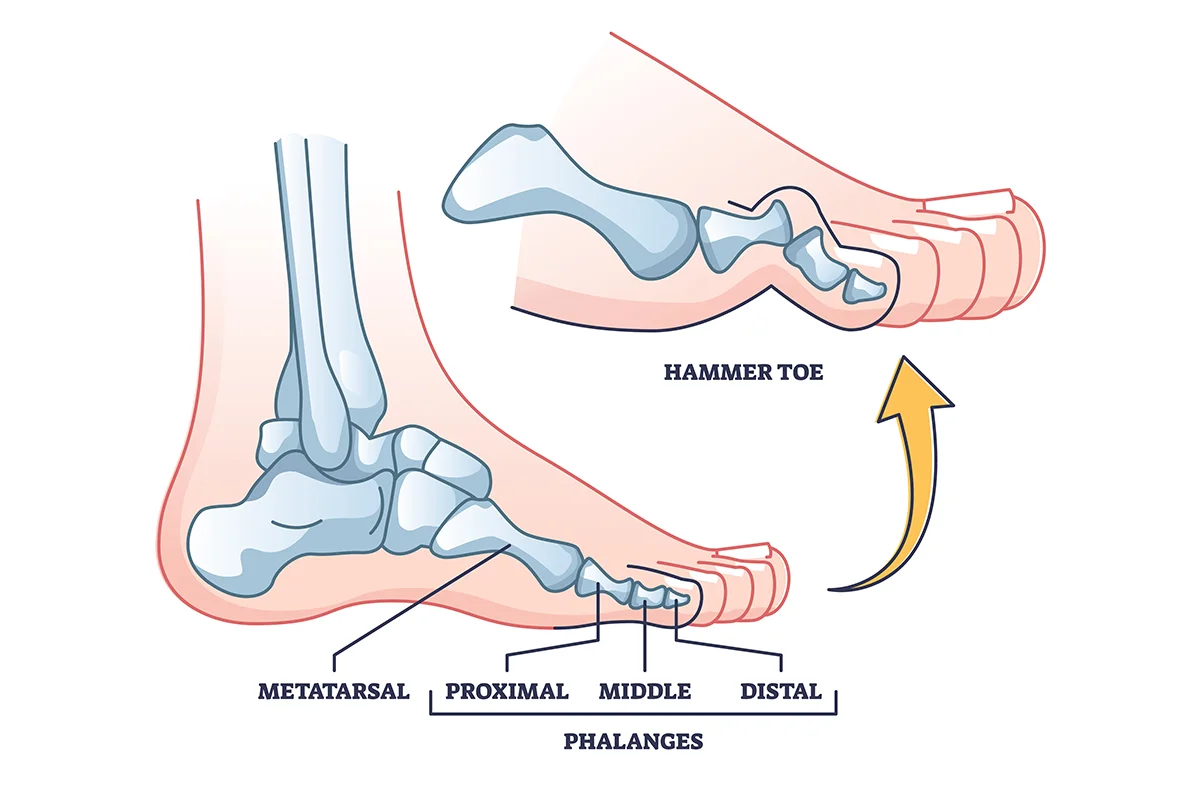
Hammer toe is a condition where a bent middle joint in the toe causes it to curl downward. It can cause toe or foot pain.
What is hammer toe?
Hammer toe is a deformity causing the toe to bend downward into a claw-like position. The condition may affect any toe but is most commonly an affliction of the second toe.
Cause of hammer toe
Hammer toe is most commonly caused by wearing short, narrow shoes that are too tight, forcing toes into a bent position. Muscles and tendons in the toe tighten and become shorter. In rare cases, all of the toes are affected. This may be caused by a problem with the nerves or spinal cord.
Hammer toe is more likely to occur in people who often wear high heels or shoes that don’t fit well, or in children who wear shoes they’ve outgrown. The condition may also be present at birth (congenital).
Hammer toe symptoms
If left untreated, symptoms of hammer toe can worsen over time. Typically, the middle joint of the toe is bent and the end part of the toe bends down into a claw-like deformity. Other symptoms include:
- Development of a corn on the top of the toe
- Development of a callus on the sole of the foot
- Difficulty moving or straightening the toe
- Pain in the affected toe when walking or wearing shoes
Hammer toe diagnosis
A physical exam of the foot will confirm if the condition is hammer toe, particularly if your health care provider observes decreased and painful movement.
Hammer toe treatment
Your Atrium Health Floyd and Harbin Clinic providers can help suggest treatments to reduce hammer toe pain and walking problems – and when treated early, you can often avoid surgery to correct hammer toe. When mild hammer toe presents in children, it can often be treated by manipulating and splinting the affected toe.
Footwear changes may help relieve symptoms:
- Avoid high heels as much as possible
- Protect the joint that is sticking out with corn pads or felt pads
- Wear shoes with soft insoles to relieve pressure on the toe
- Wear the right size shoes or shoes with a wide toe box for comfort
Other interventions to consider include:
- Gentle exercise and stretching, such as picking up a towel with the toe to help stretch and straighten the small muscles in the foot.
- Hammer toe regulators or straighteners, which can be purchased or made by a foot doctor
Severe hammer toe requires an operation to straighten the joint. The surgery often involves cutting or moving tendons and ligaments. Sometimes, the bones on each side of the joint need to be connected or fused together. Most patients will go home the same day as their surgery. The toe may still be stiff after surgery, and it may be shorter.
Orthopedic services
Personalized orthopedic care from experts you trust
Get the MyAtriumHealth app
Get test results, message your provider & more.