Meningitis
Find a doctorAn early meningitis diagnosis can help you receive treatment as soon as possible, if needed. At Atrium Health Floyd and Harbin Clinic, we provide rapid testing and treatment, which is vital for bacterial meningitis.
What is meningitis?
Meningitis is a swelling of tissue called meninges. Meninges are three layers of protective tissue that surround your brain and spinal cord.
Causes of meningitis
Meningitis can develop for several reasons. It most commonly results from a viral infection. But it can also develop from:
- Bacterial infection
- Chemical irritation
- Drug allergies
- Fungi
- Parasites
- Tumors
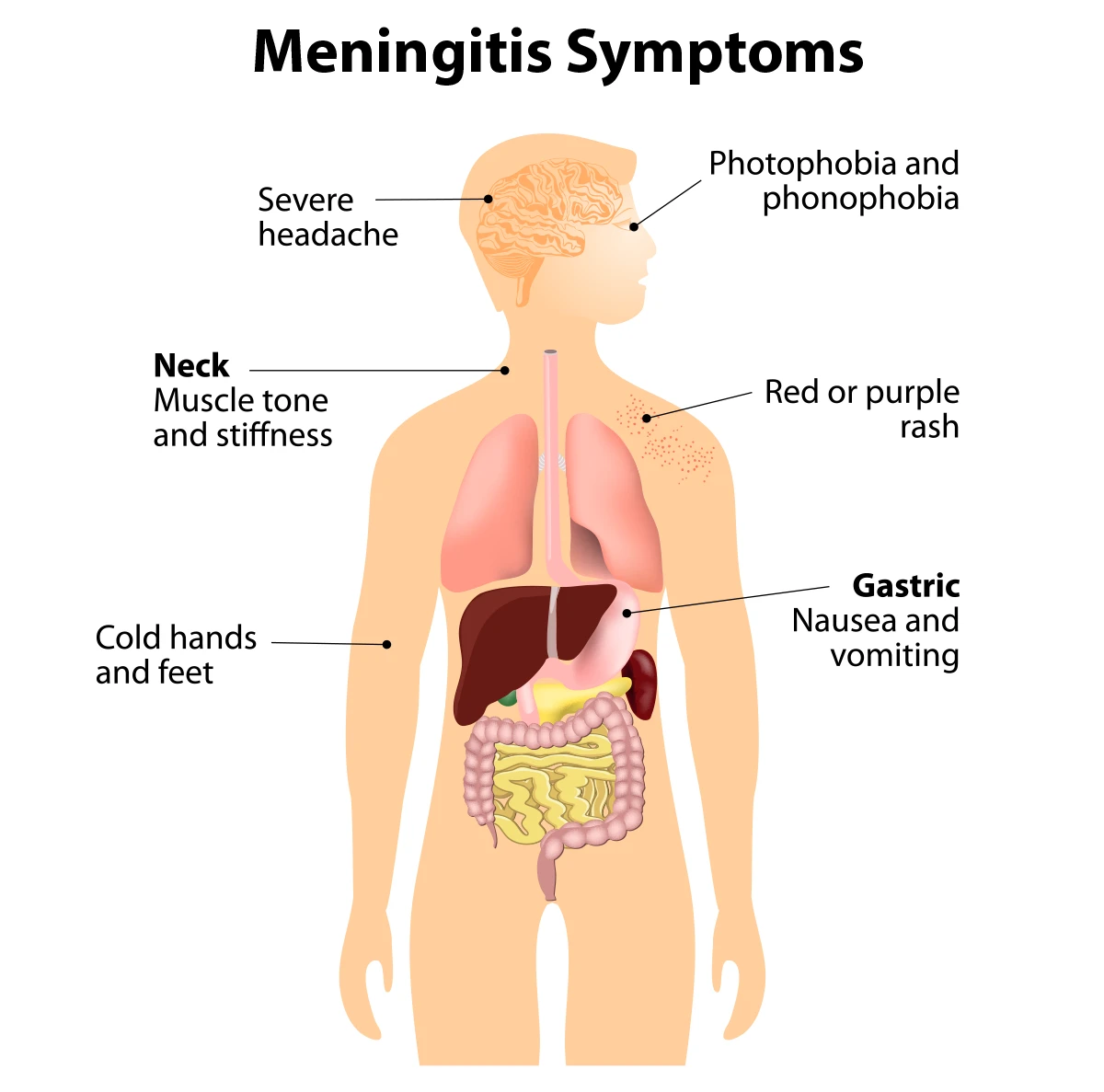
Common symptoms of meningitis.
Meningitis symptoms
Meningitis symptoms often feel like a cold, but they worsen as swelling increases. You may experience:
- Agitation and mood changes
- Arching backwards of your head and neck or neck stiffness
- Fever and chills
- Loss of awareness or alertness
- Nausea and vomiting
- Rapid breathing
- Severe headache and light sensitivity
Common meningitis symptoms in children may also include:
- Bulging soft spot in babies
- Fever and chills
- Irritability
- Poor feeding
Seek immediate medical attention if you or your child experiences meningitis symptoms. Certain types of meningitis can be life-threatening.
Types of meningitis
The main types of meningitis are viral and bacterial meningitis. They both develop from an infection.
Viral meningitis
Viral meningitis is the most common type of meningitis. It can develop from infection with several different viruses, such as the enterovirus and West Nile virus.
This type of meningitis usually gets better without treatment in a couple weeks. It usually affects people during warmer months, when viruses thrive and people are more active outside their home.
Bacterial meningitis
Bacterial meningitis is a rare but very severe type of meningitis. It results from infection with bacteria, most commonly meningococcus and pneumococcus. Bacterial meningitis is a medical emergency and requires immediate treatment.
Meningitis diagnosis
Your doctor will ask about your symptoms and recent activities to diagnose meningitis and figure out its possible cause. They will also do a physical exam to check for signs of meningitis.
You’ll need a spinal tap (lumbar puncture) to confirm a meningitis diagnosis. During a spinal tap, a doctor takes a sample of your cerebrospinal fluid (CSF).
CSF is a fluid that surrounds your brain and spinal cord. It shows signs of infection if you have meningitis. It can also show the specific type of virus, bacteria or fungus causing the infection.
Meningitis risk factors
Meningitis can develop in anyone. But it most commonly affects children and adults younger than 30. You also face a higher risk for meningitis if you have a weakened immune system or immune disorder.
Complications of meningitis
Bacterial meningitis can cause serious complications throughout your body if it is not treated effectively. Inflammation from the infection can lead to:
- Hearing loss
- Limb loss
- Prolonged loss of consciousness (coma)
- Seizures
- Stroke and brain damage
- Thinking and movement changes
- Trouble speaking
- Vision changes
Meningitis prevention
You can reduce your risk of developing bacterial meningitis by getting certain vaccines, including:
- Haemophilus (Hib) vaccine (for children)
- Meningococcal vaccine (for children and adults)
- Pneumococcal vaccine (for children and adults)
Tell your doctor if you’ve been in close contact with someone who has bacterial meningitis. You may need antibiotics to keep you from developing the infection. If you have developed bacterial meningitis, you will need antibiotics to treat it.
Related conditions
Neurology services
Personalized neurological care from experts you trust
Get the MyAtriumHealth app
Get test results, message your provider & more.