Sleep apnea
Find a doctorIn sleep apnea, your breathing pauses during the night, causing snoring and poor sleep. Untreated, it can cause many health problems.
Atrium Health Floyd and Harbin Clinic sleep medicine centers are accredited by the American Academy of Sleep Medicine. Our specialists offer comprehensive testing and treatment to help you sleep and feel better.
What is sleep apnea?
Sleep apnea is a common disorder that causes repeated interruptions in your breathing while you sleep. As air flow into your lungs decreases, your blood oxygen levels drop. Your brain senses this drop in oxygen and signals the muscles in your throat to open. Normal breathing starts again, often with a gasp.
Frequent drops in blood oxygen and reduced sleep quality can trigger the release of stress hormones. These hormones increase your risk for cardiovascular disease and other health conditions. Sleep apnea can also make you drowsy during the day, increasing your risk for accidents.
The pauses in breathing can last from a few seconds to minutes and happen 30 or more times an hour. An estimated 50 to 70 million Americans have sleep apnea, although most never receive a diagnosis or treatment.
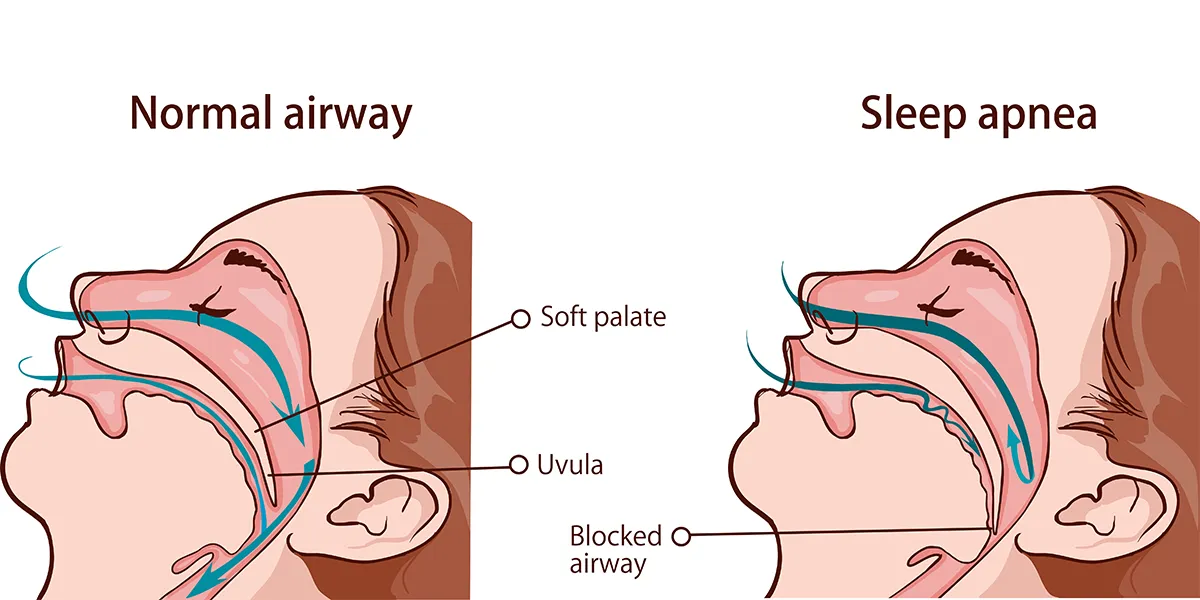
Comparison of a normal airway and an airway affected by sleep apnea, showing the blockage caused by the soft palate and uvula during obstructive sleep apnea.
Causes of sleep apnea
The cause of sleep apnea depends on the type:
- Obstructive sleep apnea is caused by a narrowing of the airway that limits air flow into your lungs. This narrowing can happen if you have a large tongue, swollen tonsils or a smaller airway.
- Central sleep apnea is caused by changes in the brain due to certain medical conditions. These changes disrupt signals to the muscles that control breathing.
Sleep apnea symptoms
The most frequent sign of obstructive sleep apnea is loud and chronic snoring, although not everyone who snores has sleep apnea. The snoring stops when your breathing pauses and starts again with a snort. You may wake up gasping for breath. The snoring is often louder when you sleep on your back.
Because you’re asleep, you may not know you’re having a problem breathing. A family member or bed partner may notice these problems before you do.
Other signs of sleep apnea include:
- Daytime sleepiness
- Irritability, depression, mood swings or personality changes
- Morning headaches
- Problems with memory, learning or concentration
- Urinating frequently during the night
- Waking up with a dry mouth or sore throat
In children, sleep apnea can cause hyperactivity, poor school performance and hostile behavior. Children with sleep apnea may also breathe through their mouths instead of their noses during the day.
Sleep apnea diagnosis
Your primary care provider may evaluate your symptoms first. If you think you have a sleep problem, consider keeping a sleep diary for a few weeks. Record how long you sleep, how often you wake up and how you feel in the morning and throughout the day. Also track caffeine and alcohol consumption, naps and exercise. This information will help your doctor decide if you need to see a sleep specialist.
Sleep apnea diagnosis is based on your symptoms, medical history, physical exam and sleep study results. A sleep study is a test to determine how well you sleep. Most sleep studies track your brain activity, breathing, heart rate and blood oxygen levels. You may go to a sleep center for the test or use a portable device at home.
Sleep apnea risk factors
Risk factors for sleep apnea include:
- Age: Sleep apnea risk increases with age.
- Anatomy: Anatomical features such as a small airway, enlarged tonsils or a large tongue increase the risk of obstructive sleep apnea.
- Family history: Having a close family member with sleep apnea increases your risk for the condition.
- Medical conditions: Conditions such as heart failure, stroke and other cardiovascular diseases increase the risk of central sleep apnea.
- Obesity: People who are overweight may have extra tissue in their neck that can block their airway.
- Sex: Men are more likely than women to have obstructive sleep apnea.
- Smoking and alcohol use: Smoking can cause inflammation in your throat that blocks air flow. Alcohol can relax the muscles in your airway, causing it to close.
Sleep apnea treatment
At Atrium Health Floyd and Harbin Clinic Sleep Center, our sleep medicine specialists can help you find a treatment that works for you. Your options may include:
- Lifestyle changes: Losing weight, quitting smoking and avoiding alcohol can make a difference in sleep apnea. Your doctor may also recommend sleeping on your side or taking allergy medications to reduce inflammation in your nasal passages and airway.
- Mouthpiece: An oral appliance is a custom-made device that pushes your lower jaw forward, creating more space in the back of your throat.
- Continuous positive airway pressure (CPAP) machine: A CPAP machine blows air into your throat to keep it open when you sleep.
- Surgery: If other treatments aren’t effective, surgery may be an option. Surgery may involve removing excess tissues in your mouth or throat or resetting your jaw. Hypoglossal nerve stimulation using an implanted device is also an option. The device detects pauses in breathing and sends an electrical signal that makes you move your tongue forward.
Get the MyAtriumHealth app
Get test results, message your provider & more.