Urinary tract infections (UTIs)
Find a doctorPain when urinating could mean you have a UTI. It’s important to see a doctor so you can receive the right treatment. At Atrium Health Floyd and Harbin Clinic, primary care providers and urologists provide expert care for routine and more severe UTIs.
What is a UTI?
UTIs are common bacterial infections of the urinary tract — your body’s system for making, storing and eliminating urine. Your urinary tract includes two kidneys that filter waste and extra water from your blood. This liquid waste (urine) drains through the ureters to the bladder and out of your body through the urethra.

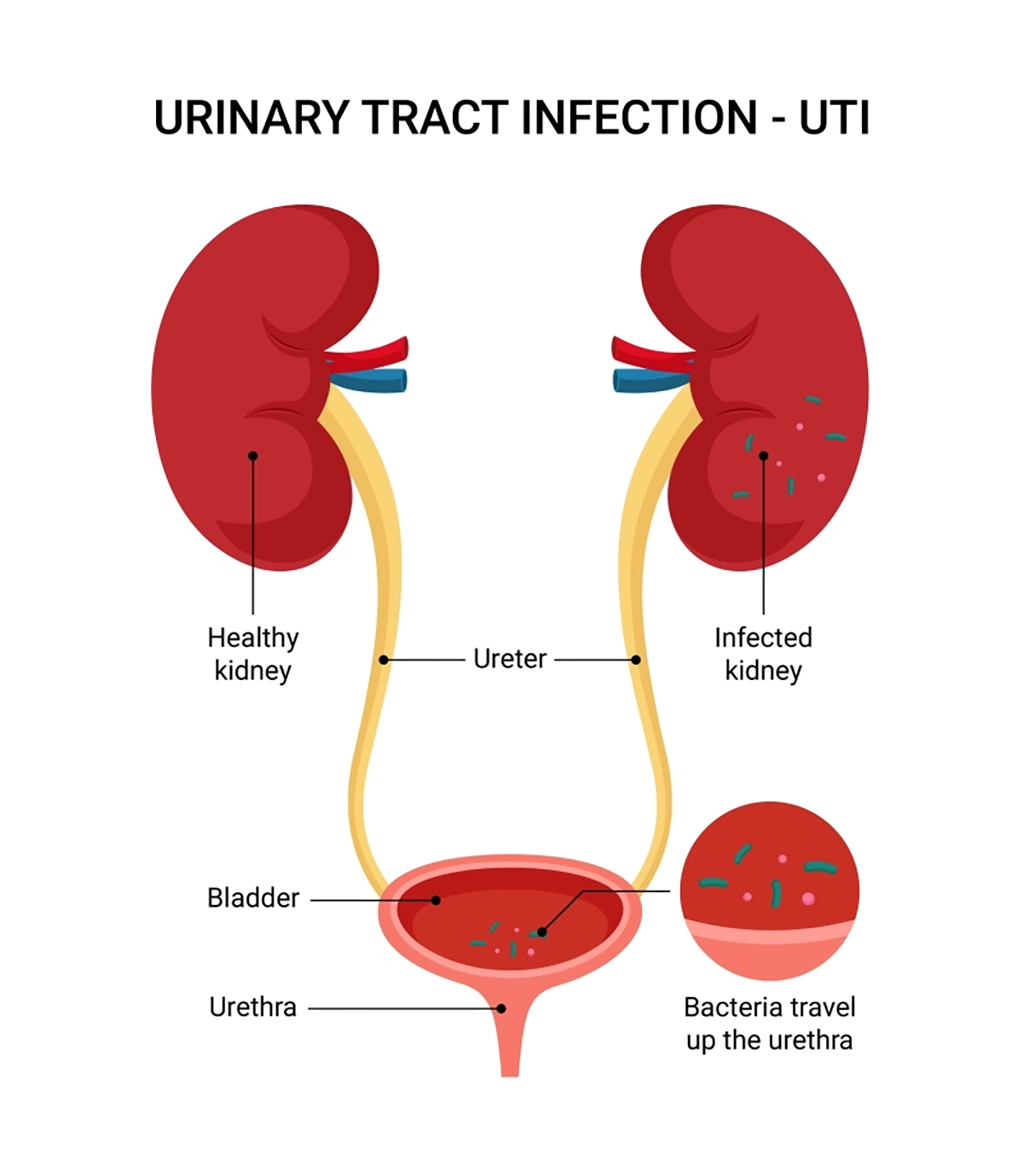
Bacteria may travel from the urethra through the bladder and ureters to the kidneys to cause a UTI.
Causes of UTIs
UTIs happen when bacteria, usually from the rectum, vagina or skin, enter your urethra and travel to your bladder. In some cases, the infection can spread to your kidneys.
Your body has natural defenses against UTIs. The design of the urinary tract prevents urine from backing up and flushes microbes out of the body. Your immune system also works to detect and destroy bacteria. Despite these safeguards, infections still occur.
UTI types
Doctors classify UTIs by where they occur:
- Bladder infection (cystitis)
- Kidney infection (pyelonephritis)
UTI symptoms
Symptoms of a UTI in the bladder include:
- Burning or pain when urinating
- Frequent urination
- Blood in the urine
- Cloudy or foul-smelling urine
- Pressure in your lower abdomen
- Urge to urinate, even with an empty bladder
An infection of the kidney may cause:
- Fever and chills
- Nausea and vomiting
- Pain in your back or side below the ribs
UTI diagnosis
Diagnosis is based on your symptoms and a lab test of your urine to check for bacteria and infection-fighting white blood cells.
If you have repeat infections, your doctor may order a urine culture. This test identifies the type of bacteria causing the infection to determine which antibiotic is best for treating it. You may also need other tests or procedures, such as:
- Cystoscopy to look at the inside of your urethra and bladder
- Imaging tests (ultrasound, CT, MRI) to look for abnormalities in your urinary tract
- Urodynamic tests to check how urine is stored and released
UTI risk factors
Anyone can get a UTI, but women are four times more likely than men to develop one. This difference is because women have a shorter urethra, which makes it easier for bacteria to get to the bladder. In women, the urethra is also located next to the vagina and anus, where many bacteria live.
Other factors that increase the risk of developing a UTI include:
- Blockages in the urinary tract, such as an enlarged prostate or a kidney stone
- Diabetes
- Impaired immune system
- Menopause
- Needing a catheter (a tube that drains urine)
- Pregnancy
- Previous UTIs
- Sexual activity
- Spinal cord injury or nerve damage
- Using a diaphragm or spermicide for birth control
UTI prevention
Steps you can take to help prevent a UTI include:
- Avoid diaphragms and spermicides for birth control.
- Drink plenty of fluids.
- Urinate after sex.
- Urinate when you first feel the urge.
- Wipe front to back after urinating.
UTI treatment
A short course of antibiotics resolves most UTIs. Drinking more fluids will help speed recovery. Your doctor may also recommend over-the-counter pain medicine, such as ibuprofen.
In some cases, you may need a longer course of antibiotics or receive intravenous (IV) antibiotics in a hospital. Factors that may increase the need for more intensive treatment include:
- Bacterial resistance to the antibiotic
- History of repeat infections
- Male sex assigned at birth (UTIs in men are often harder to treat)
- Problems with the structure of your urinary tract
- Severity of the infection
Primary care
Personalized primary care from experts you trust
Get the MyAtriumHealth app
Get test results, message your provider & more.