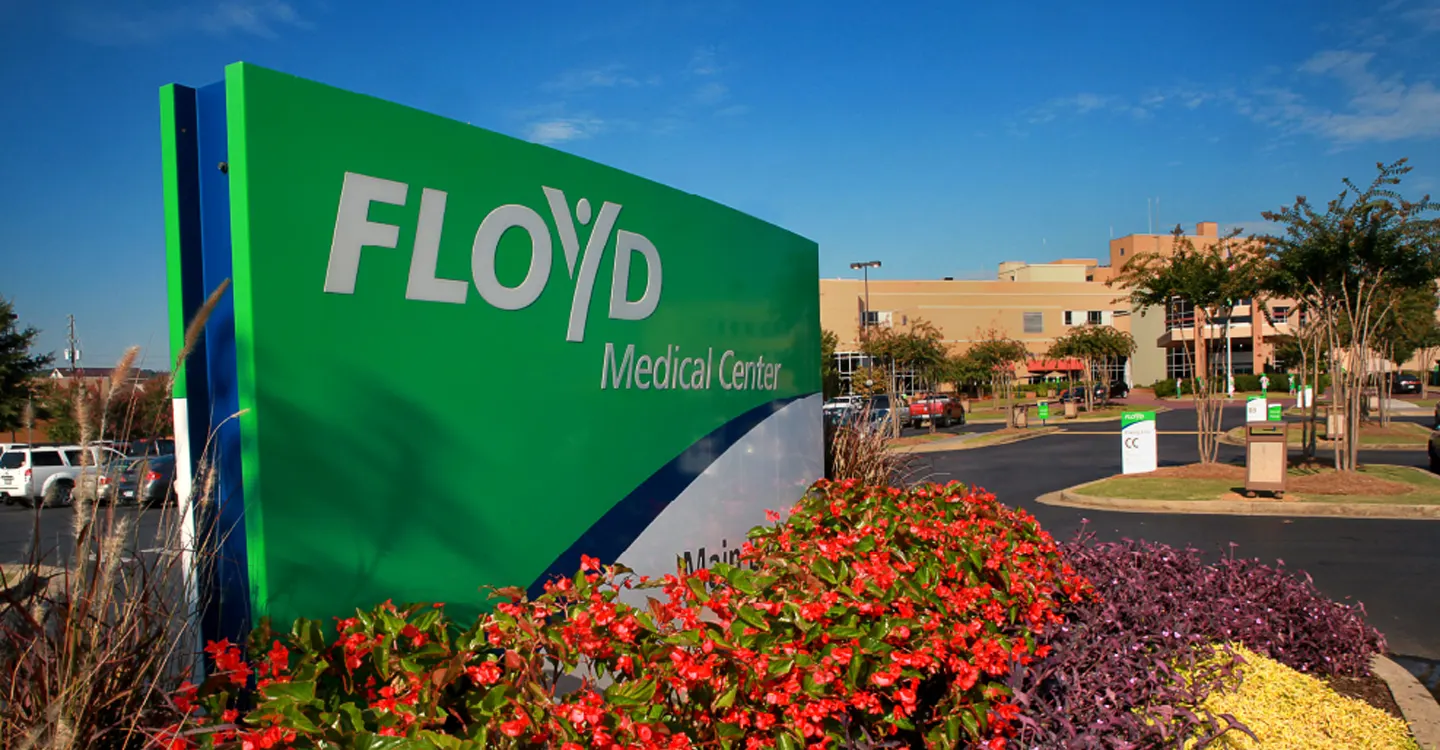
The total economic impact of the Floyd health system on local and state economies is more than $969.4 million. That figure is based on a report from the Georgia Hospital Association (GHA) and data supplied by Cherokee Medical Center and the Alabama Hospital Association (ALAHA). Floyd also provides approximately $106 million in uncompensated care while generating approximately 11,770 full-time health care-related jobs in northwest Georgia and northeast Alabama, including approximately 3,300 full-time positions within the Floyd health system.
The total economic impact reflects Floyd's direct expenditures of more than $425.4 million combined with economic multipliers developed by the United States Department of Commerce's Bureau of Economic Analysis (BEA). The jobs-generated total takes into account the approximately 3,300 full-time positions at Floyd combined with a BEA-estimated 8,447 full-time jobs that support the health system.
These multipliers factor in the “ripple" effect of the system on other sectors of the economy, such as medical supplies, durable medical equipment and pharmaceuticals. Economic multipliers are used to model the resulting impact of a change in one industry on the “circular flow" of spending within an economy as a whole.
The Floyd health system includes Floyd Medical Center, a 304-bed acute care hospital in Rome, Georgia, Polk Medical Center, a 25-bed critical access hospital in Cedartown, Ga., and Cherokee Medical Center, a 60-bed acute care hospital in Centre, Alabama. The hospitals are managed by Floyd Healthcare Management Inc.
Floyd Medical Center
The total economic impact of Floyd Medical Center on the local and state economy is more than $884.8million, according to the GHA. Floyd provides approximately $93.9 million in uncompensated care while sustaining an estimated 10,905 full-time jobs throughout Floyd County and the rest of the state, including more than 3,000 employees at Floyd Medical Center. The hospital also has direct expenditures of more than $386.5 million.
Polk Medical Center
The total economic impact of Polk Medical Center on the local and state economy is more than $55.5 million, according to the GHA. Polk provides approximately $8 million in uncompensated care while sustaining an estimated 630 full-time jobs throughout Polk County and the rest of the state, including more than 170 full-time employees at the hospital. Polk Medical Center also has direct expenditures of more than $24.2 million.
Cherokee Medical Center
The total economic impact of Cherokee Medical Center on the local and state economy is more than $29.13 million, according to hospital totals and multipliers provided by ALAHA. Cherokee Medical Center provides approximately $4 million in uncompensated care while sustaining an estimated 230 full-time jobs throughout Cherokee County and the rest of the state, including more than 70 full-time employees at the hospital. Cherokee Medical Center also has direct expenditures of more than $14.7 million.
Data for the economic impact reports is generated from reports filed for 2019.