Chronic obstructive pulmonary disorder (COPD) refers to a group of lung diseases that affect how well you can breathe. At Atrium Health Floyd and Harbin Clinic, our lung specialists (pulmonologists) offer advanced care for COPD, helping you to breathe better and enjoy a better quality of life.
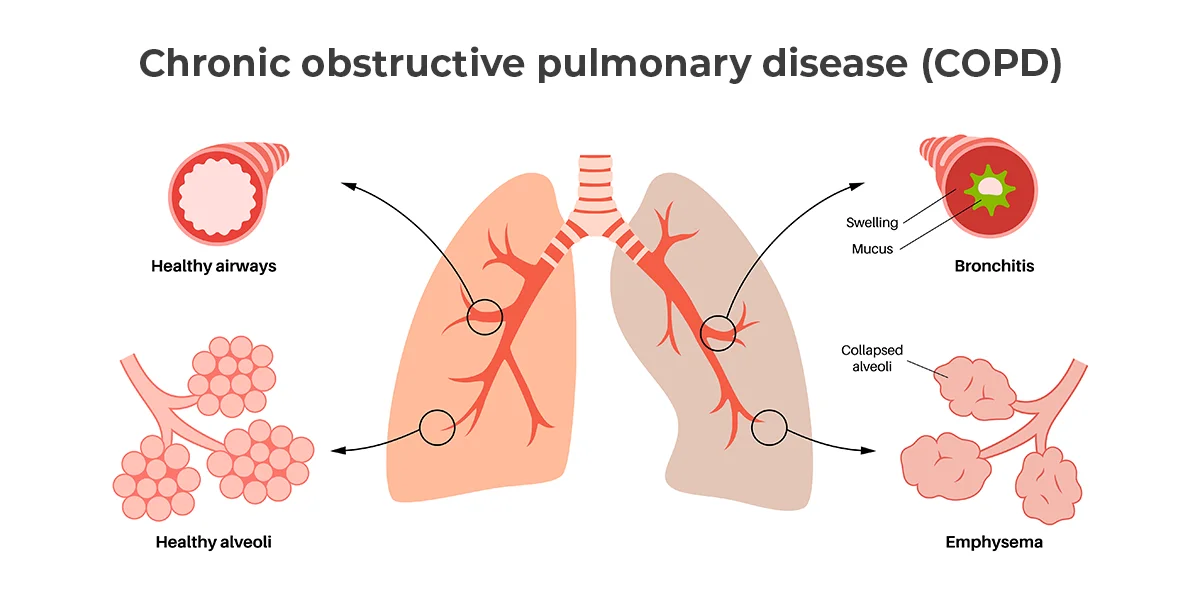
COPD can impair the lungs' ability to absorb oxygen.
What is chronic obstructive pulmonary disease?
Chronic obstructive pulmonary disease (COPD) refers to conditions that damage the lungs and airways, making it hard to breathe.
These conditions include emphysema and chronic bronchitis.
People who smoke are most at risk for COPD, but it can affect nonsmokers too. Treatments can improve breathing, but there is no cure.
These lung and airway (respiratory) changes occur when you have COPD:
- Airways that move air in and out of your lungs, as well as the air sacs (alveoli) in lungs, lose elasticity.
- Walls that separate air sacs in your lungs break down.
- Airways become inflamed and narrow.
- Scarring (fibrosis) occurs, causing more airway damage.
- Airways make more mucus than usual, blocking (obstructing) airflow in and out of your lungs.
Causes of COPD
Long-term exposure to irritants can damage your lungs and airways, causing COPD. Cigarette smoking causes most cases of COPD in the United States. Other causes include breathing in:
- Dust, chemicals or fumes from a job or hobby
- Pollutants or toxins in the air
- Secondhand smoke
COPD symptoms
COPD may cause no symptoms, or mild ones, during the early stage. Symptoms become more noticeable and severe as the disease worsens. COPD symptoms may include:
- Chest tightness or fullness
- Difficulty taking a deep breath
- Extreme fatigue
- Persistent cough with a lot of mucus
- Shortness of breath, especially while being physically active
- Wheezy, whistly or squeaky sound while breathing
COPD types
There are two main types of COPD. Many people have a combination of both types. COPD types include:
- Chronic bronchitis: Ongoing irritation and inflammation in the lining of the airways causes chronic bronchitis. Thick mucus forms in the airways, causing a blockage that affects breathing.
- Emphysema: Damage to the walls of air sacs in your lungs causes emphysema. The air sacs lose elasticity. They don’t inflate and deflate as they should, making it harder for you to move air in and out of your lungs.
COPD diagnosis
Your health care provider will conduct a physical exam and ask about your symptoms, medical history and lifestyle. They may refer you to a doctor who specializes in lung disease (pulmonologist), who will perform lung function tests.
Lung function tests include:
- Pulse oximetry using a fingertip device to measure oxygen levels in your blood
- Spirometry to measure how much air you can breathe out
- Peak expiratory flow test to see how fast you can blow air out
- Imaging tests, such as chest X-rays and CT scans, to view your lungs
- Arterial blood gas test to measure oxygen and carbon dioxide levels in your blood
COPD risk factors
Several factors may increase your risk of developing COPD, including:
- Addiction to tobacco
- Being older than 40
- Alpha-1 antitrypsin deficiency (an inherited genetic disorder)
- Asthma
- Environmental toxins like air pollution, chemicals and secondhand smoke
- Family history of COPD
- Female sex assigned at birth
- Human immunodeficiency virus (HIV), tuberculosis or other infections
Complications of COPD
COPD increases your risk of these other health conditions like:
- Collapsed lung (pneumothorax)
- High carbon dioxide levels in your blood (hypercapnia)
- Low blood oxygen levels (hypoxemia)
- Pneumonia
- Pulmonary hypertension
- Respiratory failure
- Right-sided heart failure
COPD prevention
The best way to prevent COPD is to never smoke or seek help to quit smoking. Regardless of whether you have a history of smoking, it’s also important to avoid lung irritants like secondhand smoke, dust, chemicals and fumes.
If you have COPD, your doctor may recommend getting these vaccines to lower your risk of developing dangerous respiratory infections:
- COVID
- Flu
- Pneumococcal pneumonia
- Respiratory syncytial virus (RSV)
COPD treatment
COPD treatments can improve how well you breathe, helping you to complete daily activities and enjoy life more. Your doctor will develop a treatment plan based on your unique diagnosis and symptoms.
Nonsurgical COPD treatments
Nonsurgical treatment options for COPD include:
- Medications, such as bronchodilators (inhalers), steroids and nonsteroidal drugs, to ease airway inflammation
- Oxygen therapy, which delivers oxygen through a nose tube or face mask to help raise your oxygen levels
- Pulmonary rehabilitation, a supervised exercise program that may also include disease education, nutritional guidance and psychological counseling
Surgical COPD treatments
Your doctor may recommend surgery if COPD doesn’t improve with other treatments and negatively affects your quality of life. Surgical treatment options for COPD include:
- Bullectomy to remove large air spaces (bullae) that form when air sac walls are destroyed
- Endobronchial valve therapy to place valves in the bronchial tubes that release air trapped in your lungs
- Lung volume reduction surgery (LVRS) to remove damaged lung tissue and improve lung function
- Stenting to insert small mesh tubes (stents) that keep airways open
- Lung transplant to replace a diseased lung with a healthy lung from an organ donor
Get the MyAtriumHealth app
Get test results, message your provider & more.