Asthma
Find a doctorAsthma inflames and narrows your airways, making it hard to breathe. At Atrium Health Floyd and Harbin Clinic, our health care providers expertly treat asthma to help you breathe easier.
What is asthma?
Asthma is a chronic condition that causes the airways in your lungs to swell, tighten and fill with mucus. This lung disease often starts in childhood and continues into adulthood. Asthma attacks can make it difficult to breathe and cause symptoms like wheezing and coughing. In severe cases, an untreated asthma attack can be fatal.
Causes of asthma
Experts do not know the exact cause of asthma. Asthma attacks occur when your body has a strong reaction to something that enters your lungs, called an allergen or asthma trigger. The lining of the airway passages in your lungs swells and muscles around the airways tighten, restricting how much air can pass through them.
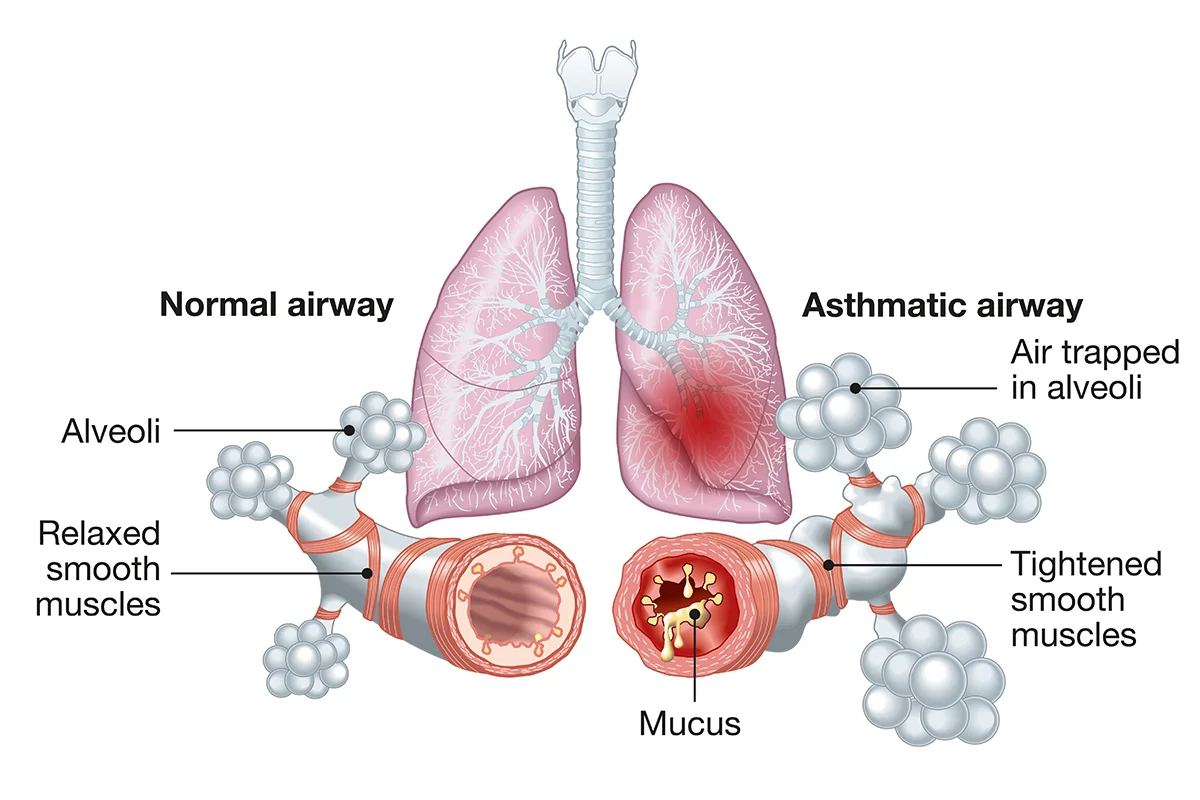
Healthy airways vs. asthmatic airways.
Common asthma triggers include:
- Air pollution
- Animal dander (usually from pets like cats or dogs)
- Cold temperatures or weather changes
- Dust mites, mold or pollen
- Exercise and other physical activity
- Foods
- Medicines, such as nonsteroidal anti-inflammatory drugs (NSAIDs)
- Respiratory infections, such as the common cold
- Strong emotions, stress or anxiety
- Tobacco smoke
Asthma symptoms
Most people with asthma have asthma attacks (also called flare-ups or flares) followed by periods without symptoms. Asthma attacks can last for minutes, hours or days. Attacks can become dangerous if airflow becomes severely blocked.
Asthma attack symptoms include:
- Abnormal breathing or trouble breathing
- Chest pain or tightness
- Cough with or without mucus
- Shortness of breath that gets worse with physical activity
- Skin that pulls in between the ribs when breathing (intercostal retractions)
- Wheezing
Emergency symptoms
These asthma symptoms may indicate an airway blockage that needs immediate medical attention:
- Bluish color to the lips or face
- Drowsiness or confusion
- Extreme difficulty breathing
- Rapid pulse
- Severe anxiety due to shortness of breath
- Sweating
Asthma types
Your asthma triggers determine what type of asthma you have. Types include:
- Allergic asthma: Allergens like animal dander, dust mites or mold trigger asthma symptoms.
- Asthma-COPD overlap syndrome (ACOS): This progressive lung disease occurs in people who have asthma and chronic obstructive pulmonary disease (COPD).
- Exercise-induced asthma: Physical activity or exertion brings on asthma attacks.
- Seasonal asthma: Cold weather, pollen or other seasonal changes cause asthma symptoms.
- Nonallergic asthma: Stress, colds or other irritants trigger asthma attacks.
- Occupational asthma: Exposure to workplace substances, such as chemicals or dust, lead to asthma.
Asthma diagnosis
Different types of health care providers can diagnose and treat asthma. You may see a primary care physician (PCP), breathing specialist (pulmonologist), allergist, or ear, nose and throat (ENT) doctor.
Doctors use several tests to diagnose asthma, including:
- Allergy tests, such as blood tests and skin tests, to check for reactions to allergens
- Blood tests to measure immunoglobulin E (IgE) antibodies that your immune system makes in response to asthma and allergens
- Imaging tests, such as chest X-rays or CT scan, to view your lungs and airways
- Lung function tests, such as spirometry and peak expiratory flow tests, to see how well air flows through your lungs
Asthma risk factors
Anyone can develop asthma. But some factors can increase your risk, such as:
- Allergies
- Black or Hispanic race/ethnicity
- Exposure to workplace chemicals, tobacco smoke or pollution
- Family history of allergies or asthma
- Obesity
Complications of asthma
A severe asthma attack can cause breathing problems that can become fatal. Asthma, and certain asthma treatments, can also lead to complications such as:
- Decline in lung function
- Diabetes
- Infections
- High blood pressure
- Osteoporosis and fractures
- Sleep apnea
Asthma prevention
Often, there is nothing you can do to prevent asthma. But these actions may lessen your exposure to asthma triggers, helping to prevent asthma attacks:
- Avoid secondhand smoke, chemicals and irritants when possible.
- Get COVID-19, flu and respiratory syncytial virus (RSV) vaccines to prevent respiratory infections that trigger asthma.
- Keep animals off furniture and out of bedrooms.
- Regularly clean your home and bedding to reduce dust mites, mold and pet dander.
- Shut your windows during pollen season.
- Take asthma medications as prescribed by your provider.
Virtual visits
Schedule a video visit or get virtual urgent care 24/7.
Get the MyAtriumHealth app
Get test results, message your provider & more.