Allergies
Find a doctorAllergies can cause symptoms ranging from itchy eyes and sneezing to potentially life-threatening breathing problems. At Atrium Health Floyd and Harbin Clinic, our ear, nose and throat (ENT) specialists offer allergy tests and treatments that help you manage your allergies and feel better.
What are allergies?
Allergies occur when your immune system overreacts to a foreign substance that isn’t usually harmful. When exposed to this substance, your immune system releases chemicals called histamines that trigger allergy symptoms.
Causes of allergies
Your immune system normally protects you from harmful foreign substances, such as bacteria and viruses. But sometimes your immune system can become oversensitive to substances that aren’t harmful, called allergens. Exposure to an allergen causes your immune system to release chemicals called histamines that set off an allergic reaction.
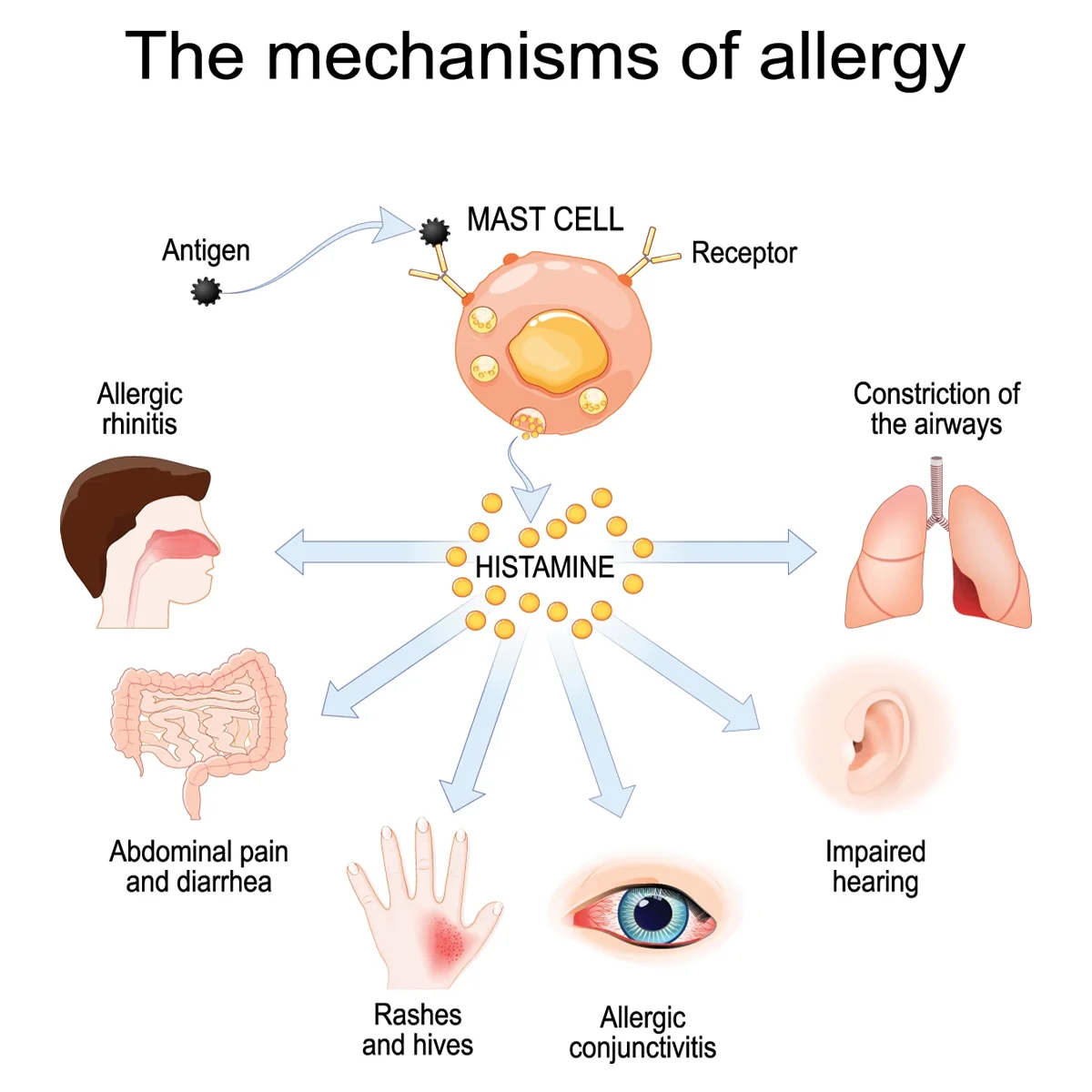
When histamine is released in response to an allergen, a variety of symptoms may appear.
Allergy symptoms
Symptoms of an allergic reaction can vary depending on the allergen and type of allergy. Common allergy symptoms include:
- Coughing
- Hives or skin rash
- Itchy eyes, nose, mouth or ears
- Red, watery eyes
- Runny or stuffy nose
- Shortness of breath or chest tightness
- Sneezing
- Stomach cramps, diarrhea or vomiting
- Wheezing or shortness of breath
Allergy types
Different allergens can cause different types of allergies. Common allergens include:
- Animal dander (usually from pets like cats or dogs)
- Dust
- Foods
- Insect venom, such as bee stings
- Medications
- Mold
- Pollen from trees, grasses or weeds
Allergy diagnosis
Your health care provider will likely perform allergy tests to determine the cause of your allergies. Allergy tests may include:
- Blood tests to measure immunoglobulin E (IgE) antibodies that your immune system makes in response to allergens
- Elimination testing, in which you cut out certain foods from your diet, to check for food allergies Skin tests (also called skin prick tests) to check for skin reactions to certain allergens
- Skin tests (also called skin prick tests) to check for skin reactions to certain allergens
Allergy risk factors
You may be more prone to allergies if you have:
- Asthma
- Eczema
- One or more family members with allergies
Allergy prevention
Often, there is nothing you can do to prevent allergies. But you can take these actions to lessen or prevent allergic reactions to common allergens:
- Keep animals off furniture and out of bedrooms.
- Read food labels, and ask questions about ingredients when eating out.
- Regularly clean and vacuum your home to reduce dust, mold and pet dander.
- Replace the filters on your home’s heating and cooling system per their recommended schedule.
- Shut your windows during pollen season.
Virtual visits
Schedule a video visit or get virtual urgent care 24/7.
Get the MyAtriumHealth app
Get test results, message your provider & more.