Pink eye
Find a doctorIf you notice your eyes are red and itchy, you might be suffering from pink eye. The condition is common and highly contagious, but very treatable. If you’re experiencing symptoms, we’re here to help and provide you with the treatment options you need.
What is pink eye?
Pink eye, also known as conjunctivitis, is an eye infection that causes inflammation and redness of the outer layer of the eye and inside the eyelid. When this happens, the white area of your eye can become infected and irritated, causing your eyes to become itchy and red. Swelling is also common. It’s easy for pink eye to spread from one eye to the other. It’s highly contagious, so it’s important to keep surfaces clean and wash your hands often when you have pink eye.
Types of pink eye and their causes
- Viral conjunctivitis: This type of pink eye is very common, contagious and is often spread through infected surfaces and respiratory droplets from colds and respiratory infections. Viral pink eye usually resolves on its own.
- Bacterial conjunctivitis: This type of pink eye is caused by specific bacteria that infects the eye, like staphylococcus or streptococcus. Bacterial conjunctivitis is extremely contagious and often requires antibiotics to get rid of the pink eye.
- Allergies conjunctivitis: This type of pink eye is caused by a reaction to allergens like pollen, dust or pet dander. Allergic conjunctivitis isn’t contagious.
Certain irritants like smoke, chemicals or exposure to chlorine from swimming pools can also cause pink eye. This type of conjunctivitis usually clears up on its own once the irritant is removed.
How contagious is pink eye?
Pink eye can be very contagious, especially if it’s viral or bacterial conjunctivitis. Pink eye can spread easily through respiratory droplets, by touching hands with someone infected with pink eye or by touching your eyes after touching infected surfaces.
If you have pink eye, avoid rubbing your eyes to help prevent the spread of infection.
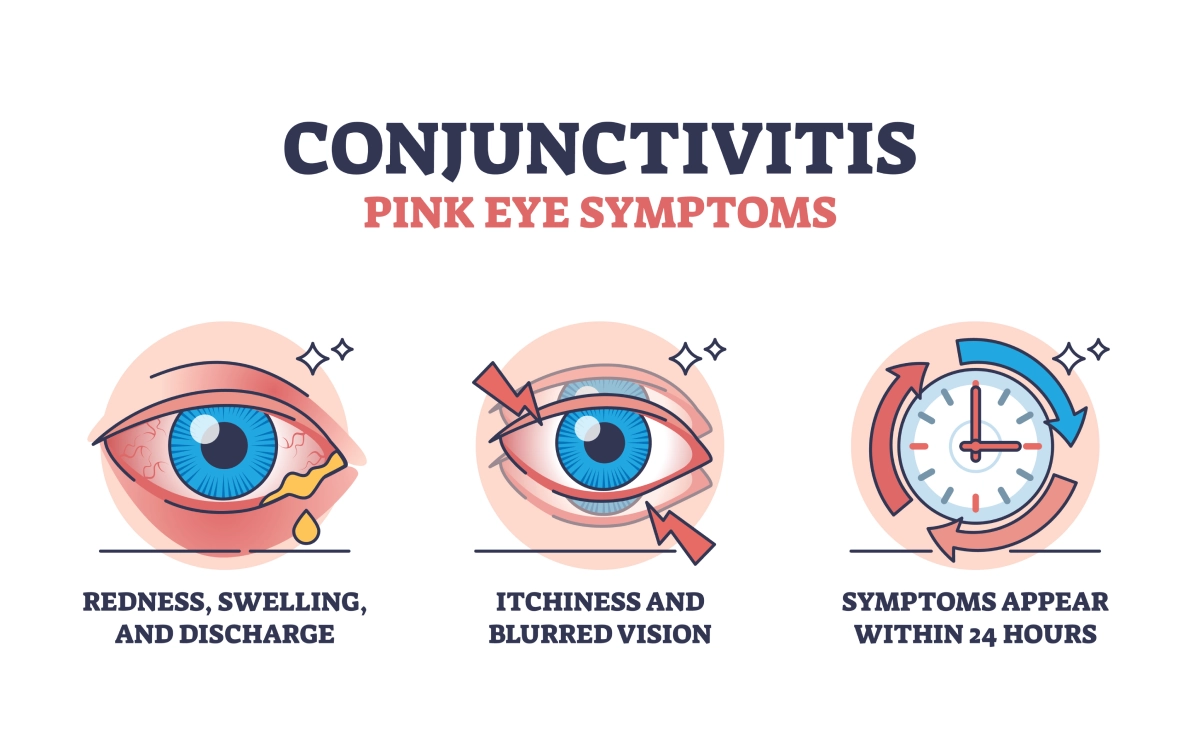
Common pink eye symptoms include redness, swelling, discharge, itchiness and blurred vision. Symptoms may appear within 24 hours.
What are the symptoms of pink eye?
Pink eye symptoms start with mild itching, watery discharge, slight redness and swelling. These symptoms can quickly become more uncomfortable as the infection progresses.
Symptoms can include:
- Redness and painful itchiness
- Swelling and inflammation
- Sensitivity to light
- Thick yellow or green discharge (with bacterial conjunctivitis)
- Crusted over eyelids or lashes
- Impaired vision due to increased discharge
- Burning sensation that gets worse throughout the day
How long does pink eye last?
Allergic conjunctivitis timeframe
Allergic conjunctivitis symptoms last for as long as you’re exposed to the allergen. Symptoms can improve with treatment and avoidance of the allergen that caused the reaction.
Bacterial conjunctivitis timeframe
Bacterial conjunctivitis clears within five to seven days with the use of antibiotics. Symptoms may start to improve within a couple days after starting treatment, but it’s important to complete the full course of antibiotics.
Viral conjunctivitis timeframe
Viral conjunctivitis can last from a few days to two weeks with symptoms usually resolving on their own. It’s highly contagious while symptoms are present.
How is pink eye diagnosed?
To diagnose pink eye, your provider will examine your eyes and ask about your symptoms. They’ll also go through your medical history.
In some cases, a sample of your eye discharge might be taken and tested to determine the type of bacteria or virus causing the infection.
How is pink eye treated?
For starters, if you wear contacts, your doctor will likely recommend you wear your glasses instead until your pink eye is resolved.
In many cases, including viral and some bacterial cases, pink eye will resolve on its own. No matter the cause, it’s important to see a doctor to get a proper diagnosis and to determine your treatment plan.
If you’re diagnosed with viral conjunctivitis, you won’t be able to use antibiotics. Your treatment will rely on warm compresses, artificial tears, good hygiene and pink eye drops for relief. In severe cases, your doctor may recommend antiviral medication.
Bacterial conjunctivitis can often be treated with antibiotics and ointments. You’ll want to make sure to complete the full course of antibiotics to ensure the infection is completely gone.
If you have allergic conjunctivitis, your provider may recommend antihistamine eye drops, oral antihistamines or other allergy medicines to help reduce itching and swelling. Your doctor will also recommend avoiding the allergens that caused your pink eye.
Preventing pink eye
The key to preventing pink eye is to practice good hygiene and to avoid contact with those who have pink eye. Other prevention measures can include:
- Keeping your contact lenses clean and properly stored
- Washing your hands and avoiding touching your eyes if they’re unwashed
- Not sharing personal items such as makeup, towels and washcloths
- Routinely cleaning high-contact surfaces like doorknobs and light switches
Primary care
Personalized primary care from experts you trust
Get the MyAtriumHealth app
Get test results, message your provider & more.