Aneurysm
Find a doctorAn aneurysm is a bulge or ballooning in a weakened area of an artery wall. This weakened, bulging area can tear, causing a life-threatening rupture. But not all aneurysms are dangerous. At Atrium Health Floyd and Harbin Clinic, our specialists expertly diagnose and manage all types of aneurysms.
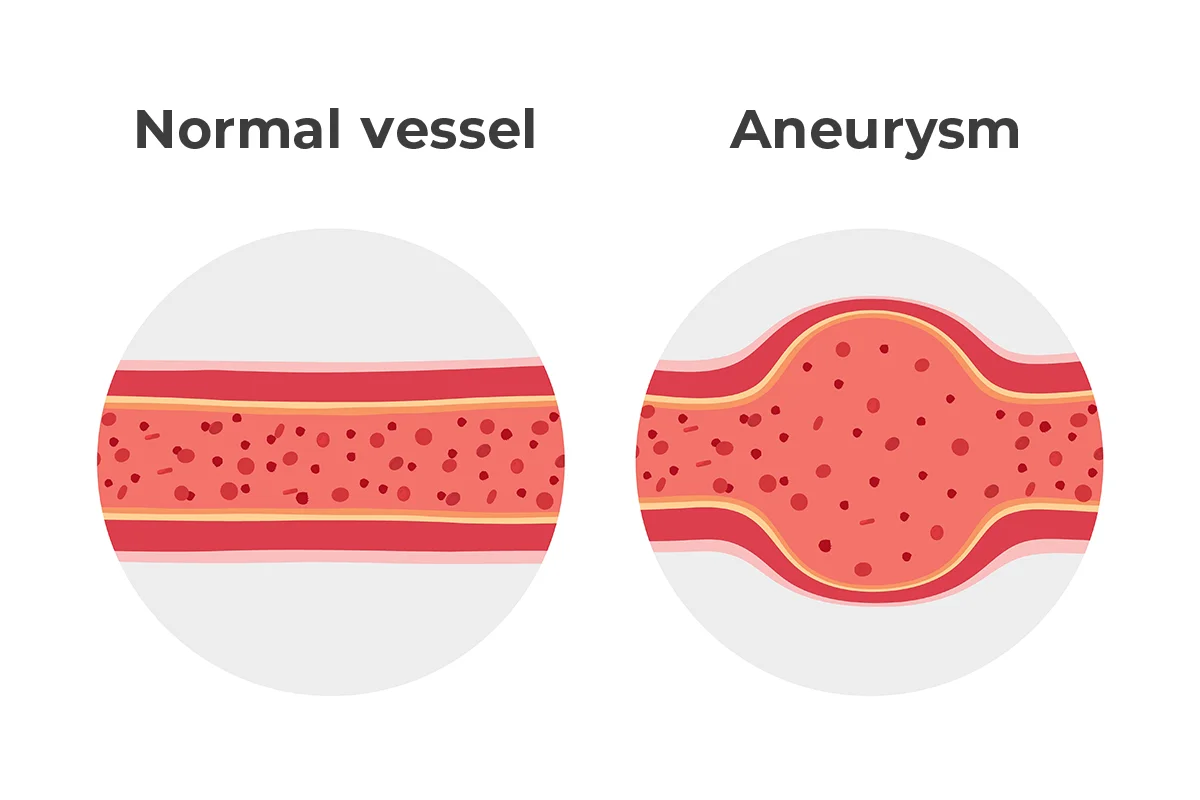
A healthy artery and an artery with an aneurysm.
What is an aneurysm?
Your arteries carry blood throughout your body. When the wall of an artery weakens, the area can balloon out or bulge as blood flows through. If the area weakens too much, the artery may tear or rupture. A ruptured aneurysm is life-threatening and requires immediate medical attention.
Causes of aneurysms
The force of blood pushing against the walls of a weakened artery causes an aneurysm. Several conditions can weaken an artery. Common causes include:
- Atherosclerosis (hardening of the arteries) and related heart diseases
- High blood pressure
- Trauma or injury
- Untreated infections such as syphilis
Aneurysm types
An aneurysm can form in any artery your body. The aneurysm type is based on the location of the weakened, bulging area. Common aneurysm types include:
- Aortic aneurysm: This most common type of aneurysm forms in the aorta, your body’s largest artery. The aorta carries blood from your heart to the rest of your body.
- Abdominal aortic aneurysm (AAA): This aneurysm forms in the abdominal section of the aorta.
- Brain aneurysm: Also called a cerebral aneurysm, this type occurs in an artery in your brain.
- Thoracic aortic aneurysm (TAA): This aneurysm forms in the upper part of the aorta near your chest (thoracic area).
Aneurysm symptoms
Aneurysms don’t always cause symptoms. Symptoms are more common when a large, bulging aneurysm presses against nearby nerves or structures, or when there’s a rupture or blockage.
Aortic aneurysm symptoms
An aneurysm in the aorta, abdominal aorta or thoracic aorta may cause:
- Coughing or hoarseness
- Dizziness
- Pain in the abdomen, back, chest, neck or jaw
- Rapid heart rate
- Shortness of breath
- Trouble swallowing
Brain aneurysm symptoms
An aneurysm in your brain can cause:
- Confusion
- Drooping eyelids
- Nausea and vomiting
- Sensitivity to light
- Stiff neck
- Sudden, severe headache
- Vision changes and dilated pupils
Aneurysm diagnosis
If you have an aneurysm but no symptoms, your health care provider may discover an aneurysm during an imaging test that's part of a routine screening. If you do have symptoms, your provider will first conduct a physical exam and ask about your symptoms and medical history. They will then order imaging tests to look for an aneurysm.
These imaging tests can help detect an aneurysm:
- Angiogram
- CT scan
- Echocardiogram
- Ultrasound
Aneurysm risk factors
Certain factors can increase your risk of developing an aneurysm, including:
- Age over 65
- Family history of aneurysms
- Heart disease, including high blood pressure and atherosclerosis
- History of smoking
- Male sex assigned at birth (for aortic aneurysms)
- Substance use disorders (addiction)
Aneurysm prevention
These actions may help lower your chances of having an aneurysm:
- Eating a heart-healthy diet
- Getting plenty of physical activity
- Managing health conditions like high blood pressure
- Maintaining a healthy weight
- Seeking help for substance use disorders, including quitting smoking
Heart services
Personalized heart care from experts you trust
Get the MyAtriumHealth app
Get test results, message your provider & more.