Spinal stenosis is a narrowing in the spine that puts pressure on your spinal cord and nerves. The spine specialists at Atrium Health Floyd and Harbin Clinic offer comprehensive care to relieve pain and help you get moving again.
What is spinal stenosis?
Spinal stenosis occurs when the spaces in the bones of your spine (vertebrae) become narrowed. These constricted areas press on the spinal cord and its branching nerves. Spinal stenosis mainly affects people over the age of 50.
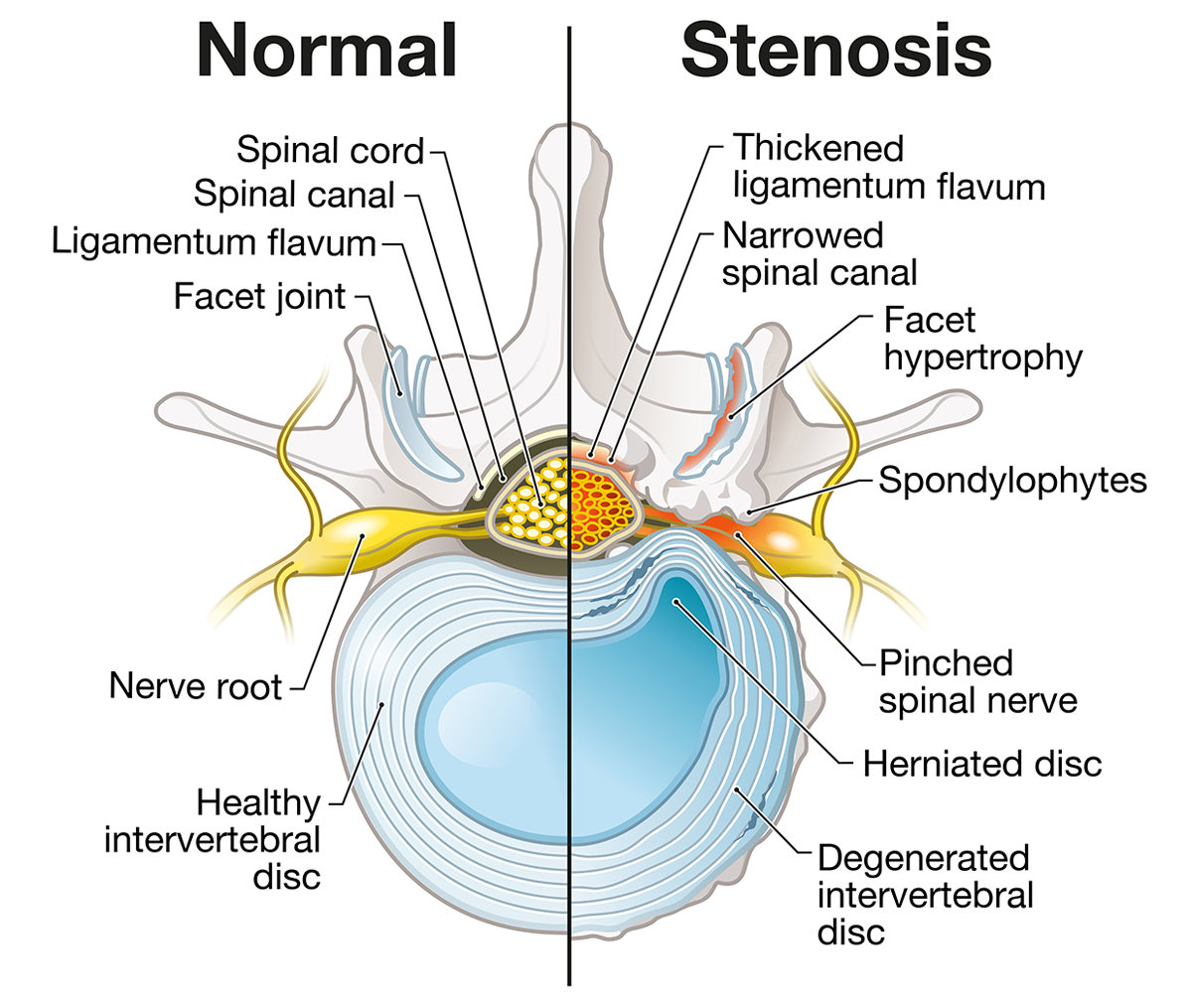
A healthy spine (left) compared with one affected by spinal stenosis in which the spine is narrowed.
Causes of spinal stenosis
The most common cause of spinal stenosis is age-related changes in your spine, particularly osteoarthritis. In osteoarthritis, the tissues in your joints break down over time. These changes can cause:
- Bone spurs: These bony projections grow at the joints in your spine when bones start to rub together.
- Herniated discs: This condition occurs when the discs between the vertebrae bulge.
- Spondylolisthesis: In this condition, one vertebra moves forward over another vertebra.
Spinal stenosis can also be caused by:
- Bone diseases, such as Paget’s disease
- Rheumatoid arthritis
- Scoliosis
- Spinal anomalies present at birth
- Spinal injuries
- Spinal tumors
Spinal stenosis symptoms
Symptoms of spinal stenosis include pain, numbness and weakness. Depending on which vertebrae are affected, you may have these symptoms in your back, buttocks, legs, neck, shoulders or arms. Often, symptoms get worse when you stand or walk and improve when you sit down or lean forward. They may occur on only one side of your body or both.
Spinal stenosis can also cause:
- Loss of urine or bowel control (incontinence)
- Poor balance when walking
- Problems with sexual function
Spinal stenosis diagnosis
Doctors diagnose spinal stenosis with a physical exam and imaging tests. The physical exam helps determine the location of the pain and how it affects your movement. Your doctor may:
- Ask you to stand, walk, bend or lift your legs while lying down
- Test your reflexes, muscle strength and sensitivity to touch
X-ray, MRI and CT scans can detect damage or disease in the spine that can cause spinal stenosis.
Spinal stenosis treatment
There are many nonsurgical options for treating spinal stenosis. These treatments are typically used to prevent further damage and help you manage pain so you can be as active as possible.
Options include:
- Back brace to support your back
- Cold and heat therapy
- Complementary treatments, such as acupuncture, massage therapy and chiropractic care
- Physical therapy
- Pain medications
- Spine injections
- Talk therapy (cognitive behavior therapy)
Spinal stenosis symptoms often worsen over time, but this may happen slowly. If other treatments are not effective, or you lose movement or feeling, you may need spine surgery.
The main goal of surgery is to correct the underlying problem and relieve pressure on the nerves or spinal cord. The procedure may involve removing a herniated disc or part of a vertebra. The surgeon may widen an opening to create more room for your spinal cord or nerves. In some cases, surgery requires the fusion of several vertebrae to stabilize your spine.
Your doctor will review all your treatment options and the benefits and risks of each. They’ll take time to answer all your questions so that you can decide the approach that’s right for you.
Neurology services
Personalized neurological care from experts you trust
Physical therapy services
Personalized therapy & rehab from experts you trust.
Get the MyAtriumHealth app
Get test results, message your provider & more.