Urgent care or emergency care?
Where should you go when the unexpected happens? Knowing the difference between urgent care, emergency care and primary care can save you time and money and help you feel better fast. Choosing the right level of care is up to you.
If you or a loved one has difficulty breathing, symptoms consistent with stroke or heart attack, or a life- or limb-threatening condition, call 911 or go to a nearby emergency department immediately.
Immediate care/urgent care
You can go to an immediate care/urgent care clinic for non-life-threatening medical issues that could become worse if not treated quickly. Immediate care/urgent care is suitable for:
- Medical issues that occur before or after your primary care provider’s normal business hours
- When your primary care provider isn’t available soon enough
- When you don’t have an established primary care provider
Emergency care
Emergency care clinics treat conditions that may be life- or limb-threatening. Emergency care is suitable for:
- Emergency health care 24/7
- Treating infants or young children
- Peace of mind when you’re not sure if your condition can wait for other types of care
Advantages of immediate care/urgent care
Staff at immediate care/urgent care clinics can perform X-rays. They can quickly access results from lab testing for illnesses such as urinary tract infections (UTIs), strep throat, flu, RSV and COVID. Other advantages are:
- Quicker access to care for non-life-threatening illnesses or injuries
- Lower cost than an emergency department
- No appointment necessary
- Streamlined processes reduce wait times
- Extended hours nights and weekends
Our immediate care/urgent care clinics provide the world-class care of Atrium Health Floyd and Harbin Clinic.
Advantages of emergency care
Emergency care is available 24/7 for serious medical conditions. Call 911 or go to the nearest emergency room for life- or limb-threatening medical conditions such as:
- Broken bones protruding from the skin
- Chest pain
- Coughing or vomiting blood
- Difficulty breathing
- Drug overdose or poisoning
- Extremely high fever
- Eye injuries or loss of vision
- Head or neck injuries
- Poisoning or drug overdose
- Seizures, fainting or unconsciousness
- Serious burns or wounds
- Severe cold or flu symptoms
- Severe stomach pain
- Severe trauma
- Stroke symptoms such as blurry vision, slurred speech, confusion, severe headache, and numbness or weakness on one side of the body
- Sudden dizziness, weakness, or loss of coordination or balance
- Uncontrolled bleeding
- Vaginal bleeding during pregnancy
Infants and young children may require emergency care for some medical issues that wouldn’t be an issue for an older child or adult.
Primary care
Your primary care provider can be a good choice for some common illnesses and injuries that come on suddenly – as long as you can get an appointment quickly.
Not sure whether you should seek care immediately? Calling your primary care provider and asking their opinion could point you in the right direction.
Call your primary care provider’s office as soon as possible after an emergency care or urgent care visit so they can help you schedule a follow-up appointment and assist you with any further care.

Virtual visits
Find care anytime, anywhere. Schedule a video visit or get virtual urgent care 24/7.
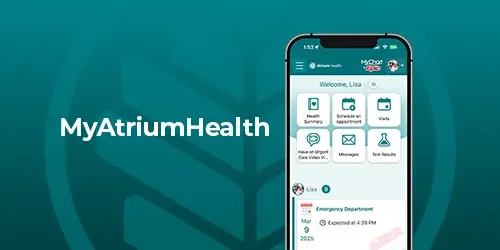
Get the MyAtriumHealth app
Access your medical records anytime, anywhere. View test results, request prescription refills, message your provider and more.