Meniscus tear
Find a doctorA meniscus tear causes painful knee symptoms that interfere with your movement. Specialists at Atrium Health Floyd and Harbin Clinic use the latest treatments and minimally invasive approaches to help you get back to doing the things you love.
What is a meniscus tear?
A meniscus tear is damage to your meniscus – a C-shaped disc of cartilage tissue in your knee. You have two menisci in each knee.
Your menisci sit between your thigh bone and shin bone. They protect your knee joint, acting as shock absorbers and stabilizing your knee.
Causes of meniscus tears
A torn meniscus often results from a single traumatic event, such as:
- Getting hit on your knee
- Squatting or kneeling down, especially to lift something heavy
- Stopping quickly or changing direction while moving
- Twisting or moving your knee beyond its normal range of motion
These movements can cause a sudden tear, whether you’re playing sports or doing a daily activity. You may also develop a tear slowly as the tissue breaks down over time.
Meniscus tear symptoms
You may feel a popping sensation in your knee right when you tear your meniscus. However, injury symptoms usually develop and worsen over a few days.
You may experience:
- Knee pain, especially when moving your leg
- Locking or catching of your knee
- Stiffness in your knee
- Swelling around your knee
- Trouble fully bending or extending your knee
- Trouble squatting
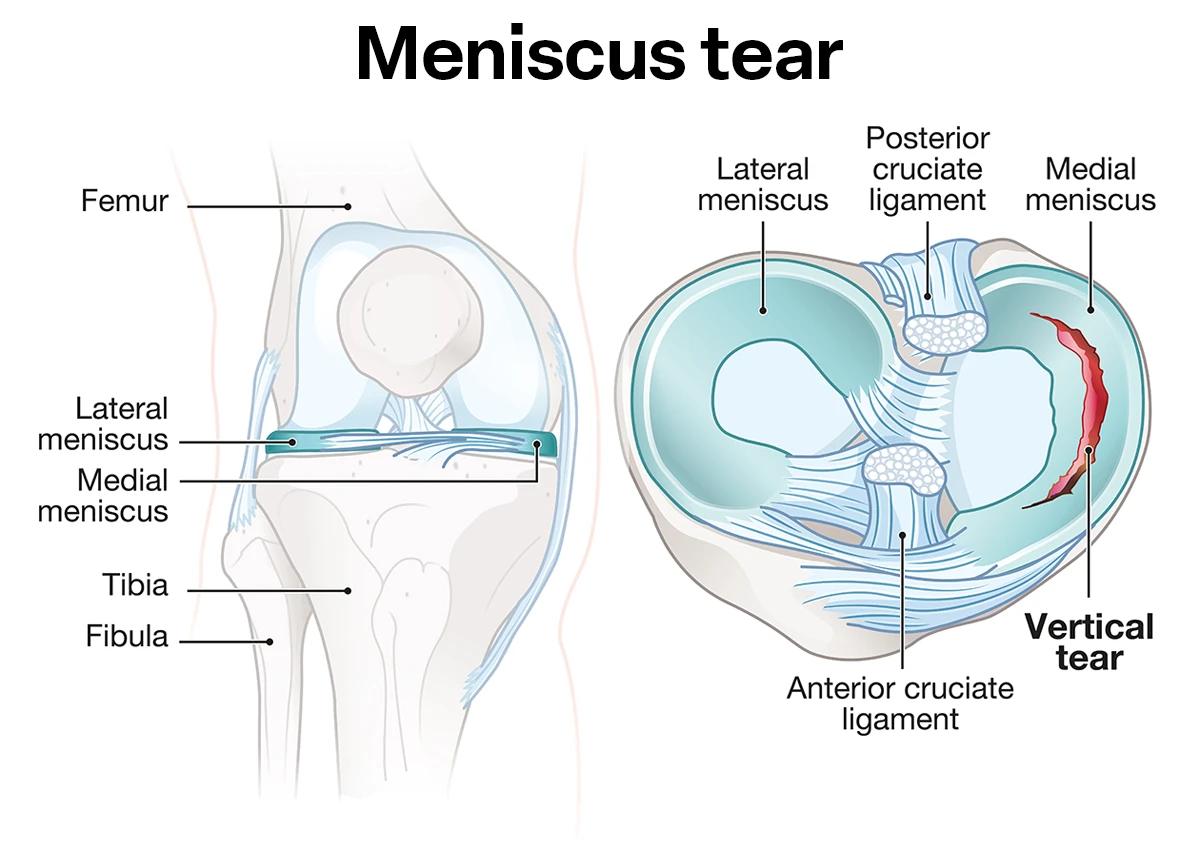
These images show the bones, ligaments and menisci of the right knee joint from different directions.
Meniscus tear types
The type of meniscus tear depends on where the tear happens. You may have a:
- Medial meniscus tear, which occurs in the meniscus located on the inner part of your knee
- Lateral meniscus tear, which occurs in the meniscus on the outer part of your knee
A meniscus tear can also have different shapes. Common tears include:
- Bucket handle tear, a vertical tear that causes the meniscus to flip inward
- Degenerative tear, a breaking down or fraying of the meniscus over time
- Flap tear, a tear that creates a loose piece of meniscus tissue
- Horizontal tear, a tear parallel to the surface of the meniscus
- Radial tear, which starts at the inner edge of the meniscus
Meniscus tear diagnosis
Your doctor will ask about your symptoms and medical history. They’ll also do a physical exam of your knee. They may bend or move your leg in several ways to check for signs of a torn meniscus.
You’ll likely need an imaging test so your doctor can see inside your knee. Your doctor may recommend:
- MRI, which takes detailed pictures of your knee bones and soft tissues
- X-ray, which checks for bone damage and signs of other joint problems
- Knee arthroscopy, a minimally invasive procedure that helps your provider diagnose tissue damage
Meniscus tear risk factors
You have a higher risk of tearing your meniscus as you get older, especially after age 40. Your menisci wear down over time, making them more prone to injury.
Other factors that increase your risk include:
- Assigned sex at birth: Males are more likely to tear their meniscus than females.
- Choice of sport: Playing sports that strain your knees, such as soccer, football, basketball and skiing, increase your risk for a torn meniscus.
- Knee health: Previous knee injuries, especially anterior cruciate ligament (ACL) tears, make you more likely to tear your meniscus. Joint diseases like osteoarthritis also increase your risk.
- Occupation: Jobs that require you to squat or kneel regularly also strain your knees.
Meniscus tear prevention
You can’t always prevent a meniscus tear, especially when it stems from a traumatic event. But you can do certain things to help protect your knees and reduce your risk for injury, including:
- Actively warming up before playing sports or exercising
- Maintaining a healthy weight
- Slowly increasing your exercise intensity, force and duration
- Strengthening your leg muscles through targeted exercises, such as weight training, bicycling or stair climbing
- Wearing well-fitting shoes
Orthopedic services
Personalized orthopedic care from experts you trust
Get the MyAtriumHealth app
Get test results, message your provider & more.